GI Chemical Earthing
Cost-effective GI electrode options for general industrial body earthing and project grounding where galvanized steel construction is permitted by the specification.
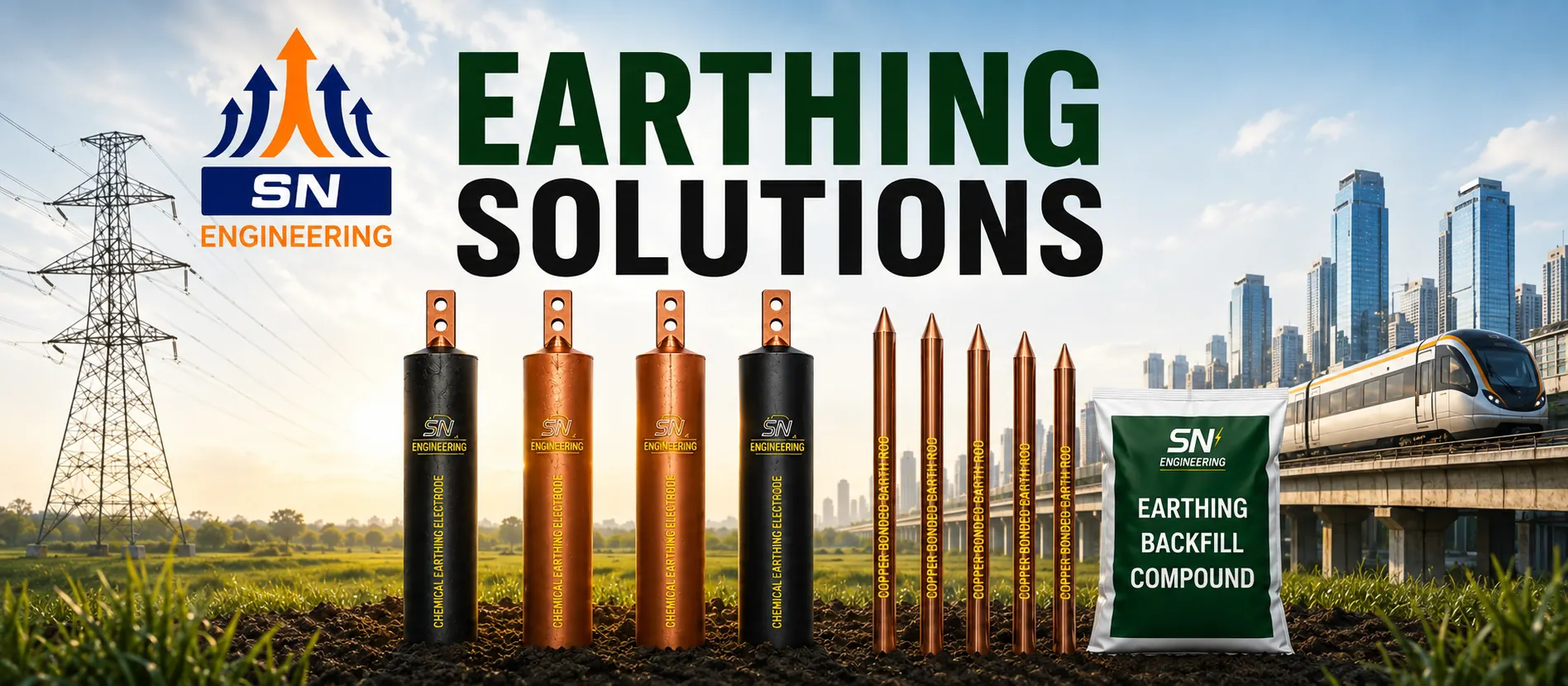
Industrial and project-grade chemical earthing electrodes with selection, BOQ, installation and quotation support.
SN Engineering · India
SN Engineering supplies chemical earthing electrodes for electrical body earthing, equipment grounding, neutral earthing and project grounding networks. The range includes GI and pure copper electrodes, including pipe-in-pipe construction, with size and material selection based on the electrical duty, soil condition, project specification and installation environment.
This page is intentionally focused on chemical earthing products and project selection. Instead of treating every industry, department, tender and equipment type as a separate keyword, the objective is to help engineers, contractors, consultants and purchase teams choose an appropriate electrode and request a technically meaningful quotation.
Cost-effective GI electrode options for general industrial body earthing and project grounding where galvanized steel construction is permitted by the specification.
High-conductivity copper electrode options for projects that specifically require copper construction or where corrosion environment and design criteria justify the material.
Concentric pipe construction designed to provide a robust electrode body with conductive filling and multiple material and size configurations.
Product range
| Product | Construction | Common Size Options | Typical Selection Basis |
|---|---|---|---|
| GI Chemical Earthing Electrode | Galvanized iron / steel electrode with conductive filling, subject to offered model. | 50 mm / 80 mm diameter; 2 m / 3 m length options. | Industrial body earthing, panels, machinery, utilities and general project grounding. |
| Pure Copper Chemical Earthing Electrode | Pure copper electrode configuration with conductive filling, subject to project specification. | 50 mm / 80 mm diameter; 2 m / 3 m length options. | Projects specifying copper electrodes, sensitive installations and selected neutral/body earthing duties. |
| Pipe-in-Pipe Chemical Earthing Electrode | Inner and outer conductive members arranged in pipe-in-pipe construction with conductive backfill/filling. | Multiple diameter and length combinations depending on duty. | Project applications requiring robust construction and defined electrode geometry. |
Exact wall thickness, internal member, filling material, coating/galvanization, terminal arrangement and test documentation should be confirmed against the final offered model and customer specification.
Construction
In a pipe-in-pipe chemical earthing electrode, conductive metallic members form the electrode body and the internal space is used with conductive material according to the product design. After installation, the electrode works together with the surrounding earthing compound and soil. The complete earthing system therefore depends on much more than the metal electrode alone.
Actual earth resistance is influenced by soil resistivity, moisture, pit depth, number and spacing of electrodes, bonding conductor size, joint quality, seasonal variation and the overall earthing network. For this reason, SN Engineering does not recommend treating a single resistance value as a universal product guarantee without site data and system design.
Size selection
Electrode size should be selected from the project requirement—not only from a generic catalogue number.
Diameter and length alone do not determine earthing performance. Material, wall thickness, internal construction, electrode quantity, soil resistivity and installation method must be considered together. Where a consultant or government tender specifies exact dimensions, the offered electrode should be matched to that BOQ rather than substituted on keyword similarity.
Engineering selection
GI chemical earthing electrodes are widely considered for general industrial and infrastructure earthing where galvanized steel construction is accepted. They can provide a practical balance of mechanical strength and project cost.
Pure copper chemical earthing electrodes are selected when the specification explicitly calls for copper, when higher conductivity is desired, or where the environmental and lifecycle assessment supports copper construction. Copper should not automatically be quoted merely because it sounds “premium”; the project specification and corrosion environment matter.
For neutral earthing, transformer earthing, DG earthing or sensitive electrical installations, electrode material is only one part of the system. Neutral conductor arrangement, bonding philosophy, protection system, number of pits, conductor sizing and permissible touch/step voltages may also matter. Final selection should follow the approved electrical design and applicable project standard.
Applications
Rather than listing hundreds of near-duplicate applications, the main use cases can be grouped into a small number of engineering categories:
LT/HT panels, machinery, motors, process equipment, utilities and plant electrical distribution.
Body and neutral earthing subject to the approved electrical design and equipment manufacturer requirements.
Main panels, UPS systems, electrical rooms, services and building grounding networks.
Equipment structures, inverter stations, distribution panels and project earthing grids as specified.
Grounding infrastructure for racks, power systems and supporting electrical equipment within the approved design.
Rail, metro, airports, utilities, public buildings and tender-based projects where the electrode meets the BOQ and technical specification.
Site execution
Check soil resistivity where available, project drawings, target values, equipment duty and the specified electrode material.
Choose GI or copper construction, diameter, length, quantity and conductor connection according to the approved design.
Install the electrode and conductive backfill/compound correctly, then connect the earthing conductor using reliable joints and corrosion-conscious workmanship.
Measure the completed earthing system using the appropriate test method and retain readings, location identification and commissioning records.
Important: “Maintenance-free” should not be interpreted as “inspection-free.” Earthing pits, joints, conductors and resistance trends should still be inspected as part of the facility’s electrical maintenance program.
BOQ & procurement
For project procurement, the useful quotation is one that matches the technical requirement. SN Engineering can prepare an offer around electrode material, diameter, length, quantity, earthing compound, accessories and installation scope where required. For tender enquiries, share the relevant BOQ line item and technical specification so deviations can be identified before supply.
Price varies with material type, dimensions, construction, copper content where applicable, quantity, accessories, freight, installation scope and documentation requirements. Therefore a single “chemical earthing price in India” cannot represent every project configuration accurately.
Technical enquiry
Share the basic project and site data so the electrode material, size, quantity and installation scope can be selected properly. Final performance should be evaluated for the complete installed earthing system.
Buyer questions
Neither material is universally better for every project. GI is commonly selected for cost-effective industrial earthing where permitted, while copper may be selected for a specified copper system, conductivity requirement or corrosion/lifecycle consideration. Follow the approved project specification.
These are common project diameter options. Final availability, wall thickness, material and construction should be confirmed in the quotation for the required quantity.
2 m and 3 m are common length options. The appropriate length depends on the project BOQ, site conditions, pit depth and system design.
No universal value should be guaranteed from the electrode alone. Earth resistance depends on soil resistivity, moisture, electrode geometry and quantity, spacing, backfill, conductor network and installation quality. Site testing of the completed system is essential.
Send the project location, electrode material and size if specified, quantity, application, target resistance, BOQ/specification, soil data if available, accessories required and whether installation is included.
For comparison, purchase planning and specification questions, use the Chemical Earthing Buyer Guide.
Use these focused guides for price, specification, application, BOQ and quotation requirements. Final engineering and selection are based on project/site data.
For quotation: send BOQ/specification, site location, quantity/capacity and application details to SN Engineering.
State the specified construction first: GI tube, electrolytic copper tube, solid copper rod or copper-bonded steel. Send dimensions, quantities, connection details and model-specific document requirements.
A quoted pit count is not a complete design. Soil data, electrical duty, corrosion conditions, conductor sizing and the approved acceptance criteria should be reviewed before execution.
Use the earthing RFQ and handover checklist · Related project guidance
For PWD, MES, railway, defence and large construction enquiries, review the complete grounding requirement: project specification, soil conditions, electrical duty, conductor network, bonding, maintainability and test acceptance.
Share the approved BOQ and drawings, available soil data, equipment schedule, fault/protection inputs and required design deliverables. Confirm whether the proposal covers consultancy, materials, execution or a coordinated package.
Government and construction procurement guide · Railway earthing and bonding scope